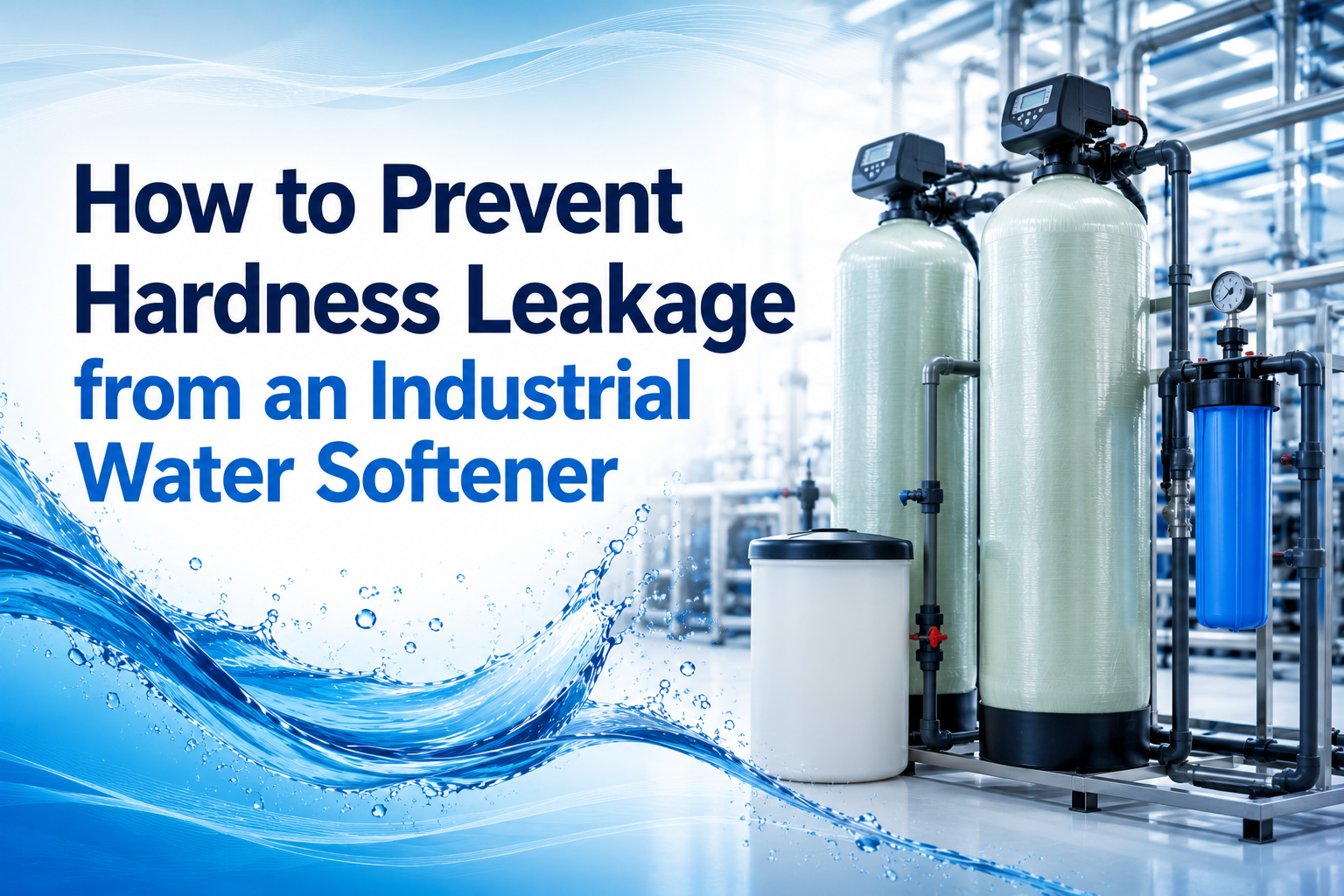
Hardness leakage from an industrial water softener can cause scale buildup in downstream equipment, reduce RO membrane lifespan, and compromise product water quality. Understanding the causes and implementing prevention strategies is essential for reliable system operation.
1
Understanding Hardness Leakage
- What is hardness leakage?
- Acceptable leakage levels (typically < 1 ppm)
- Impact on downstream equipment
- Effect on RO membrane performance
2
Common Causes
- Exhausted resin capacity
- Incorrect regeneration settings
- Brine concentration issues
- Flow rate exceeding design capacity
- Resin fouling or degradation
3
Prevention Strategies
- Regular resin testing and analysis
- Optimized regeneration cycle timing
- Proper brine concentration (10–15% NaCl)
- Correct slow rinse duration
- Pre-treatment for iron and chlorine
4
Monitoring and Troubleshooting
- Daily hardness testing at outlet
- Periodic resin capacity analysis
- Brine system inspection
- Control valve calibration
Engineering Note
Hardness leakage above 1 ppm from a water softener usually indicates a regeneration issue, not a resin failure. Before replacing resin, check brine concentration (should be 10–15% NaCl), regeneration frequency, and slow rinse duration.
Summary
Key strategies to prevent hardness leakage:
- Daily monitoring of outlet water hardness.
- Maintain proper brine concentration
- Optimize regeneration cycle settings
- Test resin capacity periodically
Proactive monitoring and correct regeneration practices prevent hardness leakage, protect downstream equipment, and extend resin lifespan.