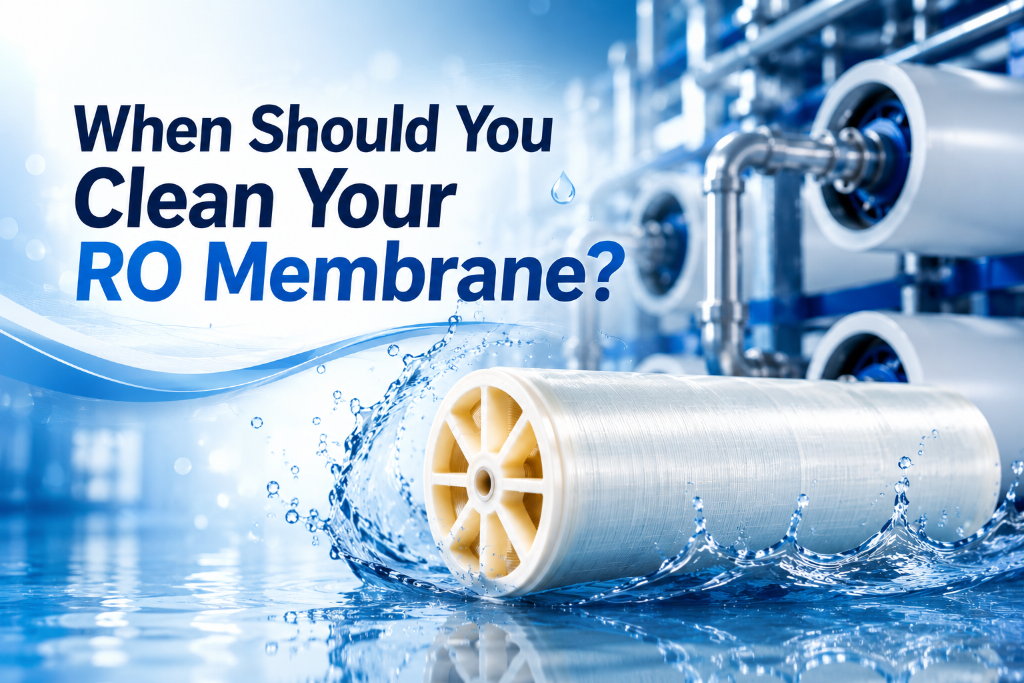
RO membrane is one of the most important components in an industrial water treatment system. During operation, membranes gradually accumulate scale, organic fouling, and suspended solids, which can reduce system efficiency and increase operating costs.
Signs that indicate your RO membrane should be cleaned
Water production decreases by more than 10–15%
If permeate flow drops significantly while operating conditions remain unchanged, membrane fouling or scaling may be occurring.
System operating pressure increases by more than 10–15%
As contaminants accumulate on the membrane surface, the system requires higher pressure to maintain production capacity.
Product water quality begins to decline
If conductivity or TDS values increase, membrane performance may be deteriorating.
Salt rejection decreases by more than 10%
Reduced salt rejection is an important indicator that membrane cleaning or inspection should be considered.
Why is early cleaning important?
Cleaning RO membranes at an early stage helps restore performance more effectively and prevents irreversible fouling. Delaying cleaning may shorten membrane lifespan and increase replacement costs.
Engineering Note
Always baseline your RO system's normal operating parameters (permeate flow, feed pressure, conductivity, salt rejection) after commissioning or membrane replacement. These baseline values are your reference point for detecting when cleaning is needed.
Summary
RO membrane cleaning should be considered when:
- Water production decreases by 10–15%
- Operating pressure increases by 10–15%
- Product water quality decreases
- Salt rejection decreases by more than 10%
Regular monitoring and preventive maintenance can help extend membrane lifespan, reduce operating costs, and maintain stable system performance.